
Why Am I Gaining Weight During Menopause?

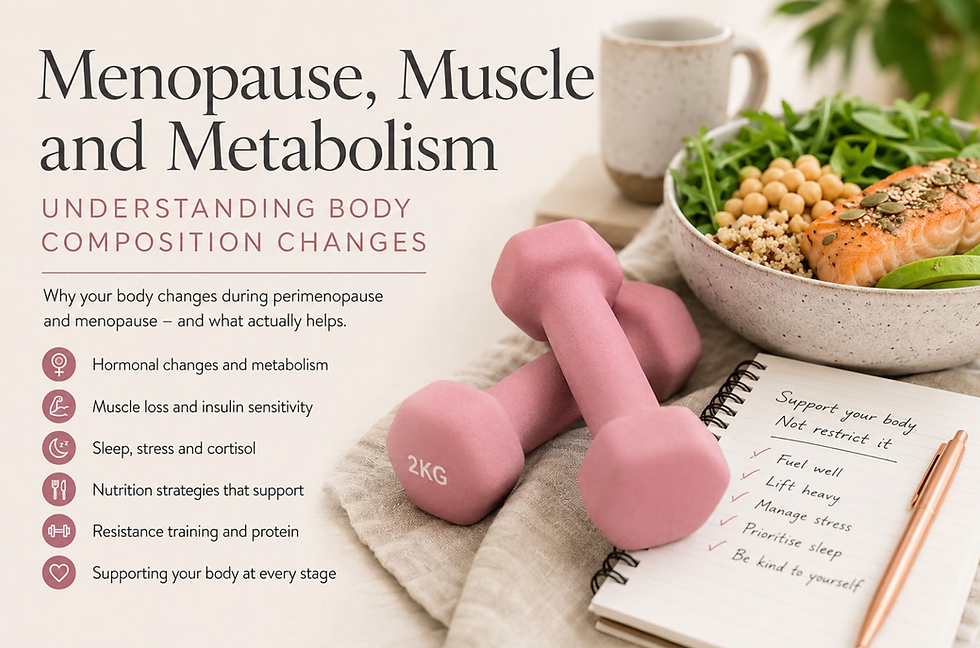
One of the most common questions I hear from women attending my Metabolic Health Clinic in Biggleswade is:
“I’m eating the same, exercising the same and yet I’m gaining weight. What has happened to my body?”
For many women, the years leading into menopause can feel incredibly frustrating. Weight begins accumulating around the abdomen, sleep becomes more disrupted, energy levels become less predictable and the diet and exercise habits that worked for decades suddenly seem ineffective.
Many women assume they simply need more willpower. They eat less, skip breakfast, increase exercise and try harder.
Unfortunately, menopause is rarely that simple.
The menopausal transition involves significant changes in hormone signalling that influence muscle mass, insulin sensitivity, stress physiology, appetite regulation, recovery and body composition. Understanding these changes helps explain why many women find themselves struggling with weight gain despite putting in more effort than ever.
Menopause Is About More Than Hormones
When most people think about menopause they think about hot flushes, night sweats and changes in periods.
What often gets overlooked is the impact menopause can have on metabolism.
Oestrogen plays important roles in muscle maintenance, insulin sensitivity, appetite regulation, nervous system function and body composition. As levels fluctuate and eventually decline, many women notice changes in:
• Weight distribution
• Muscle mass
• Recovery from exercise
• Energy levels
• Sleep quality
• Stress resilience
• Appetite regulation
This is one reason menopause often feels very different from earlier stages of life.
The same strategies that worked in your twenties and thirties may no longer produce the same results.
Why Eating Less Often Stops Working
One of the biggest mistakes I see is women responding to weight gain by drastically reducing food intake.
Skipping breakfast, fasting for long periods, increasing cardio and relying on coffee to suppress appetite may appear logical, but these approaches can become increasingly difficult to sustain during perimenopause and menopause.
Muscle becomes harder to maintain, recovery becomes slower and the body becomes more sensitive to the effects of poor sleep, stress and under-fuelling.
This is why many women feel trapped in a cycle of:
• Fatigue
• Cravings
• Poor sleep
• Reduced exercise tolerance
• Weight gain around the middle
• Increasing frustration
The answer is not fewer calories. Instead, the focus needs to shift towards supporting muscle, recovery, blood sugar regulation and metabolic health.
Why Muscle Matters During Menopause
Muscle is one of the most metabolically active tissues in the body.
It plays a major role in:
• Blood sugar regulation
• Insulin sensitivity
• Physical strength
• Balance and mobility
• Healthy ageing
• Long-term metabolic health
As women age, maintaining muscle becomes increasingly important.
This is one reason resistance training and adequate protein intake become such valuable tools during and after menopause.
Supporting Metabolic Health During Menopause
Every woman is different, but key areas often include:
• Adequate protein intake
• Resistance training
• Blood sugar regulation
• Sleep support
• Stress management
• Optimising nutrient status
• Addressing digestive health issues where relevant


Comments